

The consultation closed on Sunday 16 November. The feedback will be analysed and published soon. Thanks to everyone for taking part.
Find out more information about the consultation below.
West Lothian Council continues to face constrained funding and substantial cost increases.
Along with the West Lothian community, we will have to make hard decisions about local services.
We understand that residents and businesses are also experiencing difficulties and that it is a challenging time for everyone.
We want to work with you – our community and partners – as we strive to become more sustainable, address the funding challenges and meet the needs of our communities.
Chronic Government underfunding
The amount of funding we receive from the Scottish Government is insufficient to pay for the cost of delivering council services.
Although the Council has received increased funding from the Scottish Government, and has increased Council Tax, this is not enough to pay for the increased demand for some services, and the increased costs of providing services.
The funding gap is growing. Since 2007 the council has had to deliver over £184 million of cuts to local services because funding provided to us is insufficient to meet increasing costs.
Population Growth
Overall, West Lothian’s population is growing faster than the Scottish average, with a projected 5.9% increase between 2018-2028.
However, West Lothian is growing and getting older. The area will see a 44% rise in people of pensionable age over the next 25 years-
twice the Scottish average.
In contrast, the number of babies born in Scotland fell to a record low last year and birth rates have been falling for years. In West Lothian, the number of births registered has decreased by just over 18% over the past 20 years. Demand for nursery and primary school places is expected to fall due to declining births, particularly in areas with small amounts of new build homes.
This matters for the council because around 80% of its budget is spent on health, social care, and education, and services must meet these changing demands.
Population Growth
West Lothian’s population is growing faster than average and ageing rapidly, with a 44% rise in pensioners expected over 25 years. At the same time, birth rates have fallen by 18% in 20 years, reducing demand for nursery and primary places.
These shifts matter as 80% of the council budget goes to health, social care, and education, which must adapt to changing needs.
Inflation
Inflation has affected the cost of providing services, as everything the Council has to pay for has become more expensive.
Funding
Councils receive funding from the Scottish Government to deliver particular policies but this is ‘ring-fenced’ meaning that the money cannot be spent on anything else. Councils have less control over their budgets, and there is less to spend on other services.
75% of our budget is now ‘ring-fenced’ for national policies
Funding
Councils receive funding from the Scottish Government to deliver particular policies but this is ‘ring-fenced’ meaning that the money cannot be spent on anything else. Councils have less control over their budgets, and there is less to spend on other services.
75% of our budget is now ‘ring-fenced’ for national policies
Unless Scottish Government Grant funding increases significantly, there will be a continued need to make more cuts and the Council will have to make some difficult decisions about what services we can deliver.
Council officers have identified five main ways in which we can balance the council’s budget become more sustainable and which would still allow us to deliver core services in future.
It is important to stress that the proposals set out in the consultation are not an agreed list of measures which the Council has agreed to implement, but rather an illustration of action as suggested by council officers that could be taken under each theme. No decisions have been made at this stage.
Increasing Efficiency and Developing New Ways of Working

1
Council services are designed to meet customer needs in a cost-effective way, but we will continue to look for new ways to reduce costs and reduce duplication.
Overall, we will look at opportunities to make all services more efficient, including by new ways of working and reductions in council facilities. We will also continue to use technology and new digital solutions to improve customer service, meet growing customer demand and drive down operating costs, building on the successful work already done to modernise services, improve access and increase efficiency.
This will allow the Council to continue to provide some services at a lower cost, continuing with our ‘digital first’ approach. This means the Council will move to a default of online 24/7 access to key Council services, with access to in-person support being provided only in some services, where appropriate.
Generating Income

2
West Lothian Council currently set the lowest level of charging and fees for some services, per head of the population in Scotland.
There are areas in which we could look to generate more income to put towards funding for key services.
Reducing the Number of Council Facilities
3
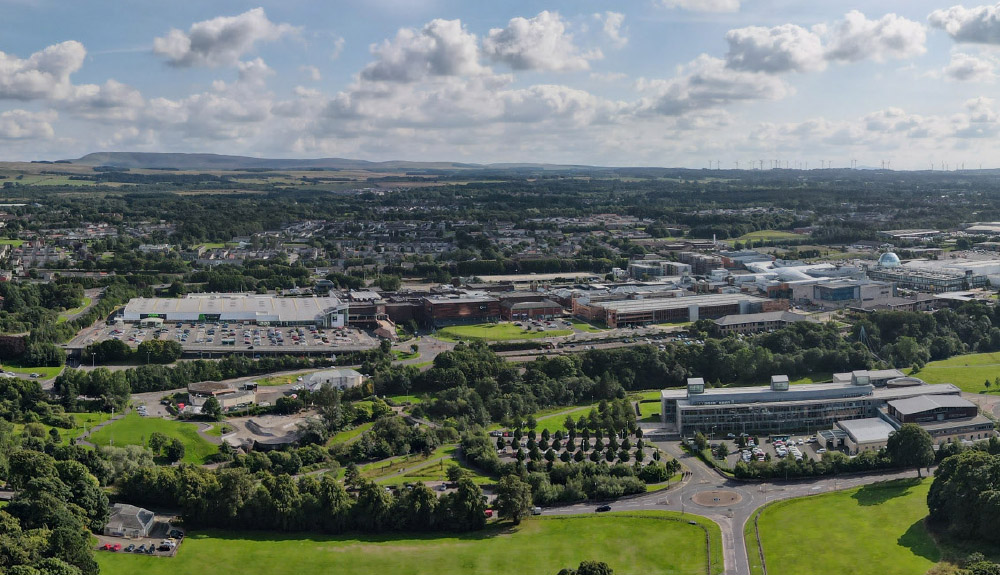
The Council will continue to provide services but with fewer buildings and facilities. This will allow us to spend money on maintaining services, rather than maintaining buildings.
We will also explore ways of maintaining access to services in ways which require fewer facilities.
Responding to Demographic Change

4
Changes in the size and age structure of the population will have an impact on the demand for public services across Scotland. As demographics change, so does demand for services.
To allow us to run services efficiently, services need to continually change to allow us to meet changes in demand.
The population of West Lothian has grown significantly over the last 10 years and this is forecast to continue. The largest areas of growth are within those aged over 65.
Over the next 25 years, West Lothian is forecast to have the fastest growth in people of pensionable age in Scotland. At the same time the number of children being born and entering our schools in some parts of West Lothian is forecast to fall.
Unless we act and design services around changes in our demographics to meet demand, the overall quality of service will decline as we do not have the funding to continue to deliver services as they currently are.
Reducing spending on non-statutory services

5
Statutory services are the services the Council is required by law to provide and receives funding from the Scottish Government to provide. Broadly, these include education, waste collection and disposal, housing and social care.
Although the Council must provide these services by law, they can be made more cost effective, and can benefit from the use of new technology and new ways of working. It may also be possible to provide services using fewer facilities, and the amount of money spent on them can change in response to demographic change, as we have explained earlier in this consultation.
Non-statutory services are the services the Council is not required by law to provide. Some are funded by the Scottish Government and others rely on funding generated by the Council. The non-statutory services which are funded by the Scottish Government are normally ‘ring-fenced’ which means that the Council cannot spend the money on anything else.
Out of the Council’s total annual revenue budget of £545 million, £503 million is spent on statutory services, and the remaining £42 million is spent on non-statutory services.
It is important to be aware that a number of these non-statutory services help to improve lives and are considered vital to many people.
With this in mind, there may be options to reduce or change spending in non-statutory services.
There are no easy decisions and we will be guided by your views.
As our budget decisions get harder, it is more important than ever to know what residents think about the tough choices we need to make.
Further information is provided below:
Council Tax provides significant positive impacts for communities and is vital to the council’s ability to balance budgets. This is a legal requirement.
It supports local capital investment in key areas, from the construction of new community facilities to maintaining vital local infrastructure such as roads and schools. It is a key element of local democratic decision-making. Council Tax rates are set by democratically-elected councillors based on the needs of local communities. Increases in Council Tax rates can, therefore, help prevent reductions to vital frontline services throughout communities. Council Tax, however, only makes up around 19% of the total funding that Councils receive.
This is a significant amount of money, but within the context of the total spent by Councils each year on essential local services such as education, collecting bins, maintaining roads and providing care services, Council Tax income is a relatively small amount. Because of the relatively small proportion of total council spending met by Council Tax, increasing Council Tax alone cannot resolve the financial challenges facing Councils.
How is each £1 of council funding spent?
Schools and nurseries 55p
Social Care 29p
Waste and Recycling Services 4p
Community Facilities (Libraries/CIS/Community Centres and Partnership Centres) 3p
Roads, Paths & Street Lighting 2p
Parks, Street Cleaning, Grass and Land Maintenance 2p
Anti-Poverty Service including Advice Shop 2p
Passenger Transport 1p
Planning and Economic Development 1p
Corporate Regulatory Functions 1p
Over 90% of the council’s revenue budget is spent on three broad areas: Education, Social Care, Operational Services (parks, roads, waste, land maintenance, bus and community transport). Further one off investment comes via capital funding and housing budgets, both are extremely limited. Council Housing is funded exclusively by rent generated via council housing tenants.
Does Council Tax pay for all council services?
19%of our income comes from Council Tax.
1% of our income comes from income and charges.
We will analyse the feedback we receive and the results will be reported back to a meeting of West Lothian Council’s Council Executive committee meeting before the end of January 2026.
Your views will help to shape the final budget proposals to be developed by council officers that are presented to elected members, and will help them to make a final decision about West Lothian Council’s budget in February 2026.
Consultation Timeline
FAQ’s
Why does the council have to implement budget savings?
Like all councils across Scotland, West Lothian Council faces significant financial pressures.
Rising costs are combined with significant increases in demand for some services. Costs and demand are far outstripping council funding, leaving the council needing to find around £23 million through savings and income generation over the next two years.
Even with proposed additional income from Council Tax, the council would still face a significant budget funding gap.
This means substantial savings are still required to balance the books, on top of the £184 million in savings the council has made since 2007.
The money the council spends on services must be equal to the amount of funding the council receives. Legally, the council must balance its budget, so ways to save money must be found and agreed.
What steps are the council taking?
Every effort is being made to ensure the council operates as efficiently and effectively as possible and that every penny of the council’s budget is used to protect core services.
We want to work with our community, staff and partners to ensure that the council becomes more sustainable, addresses the funding challenges and meets the needs of our communities.
The council’s consultation seeks your views on how the budget gap can be met.
The council has a limited amount of options in terms of what choices can be made and significant challenges lie ahead. Unless Scottish Government funding increases significantly, the council has no other option but to reduce spending to bring it in line with what funding we have available.
The amount a council spends on services must be the same as the funding we receive – that is a legal requirement and after years of insufficient levels of funding provided to councils, combined with a huge increase in demand for some services, there are no easy choices.
How can I take part in the consultation?
The consultation closed on Sunday 16 November. The feedback will be analysed and published soon. Thanks to everyone for taking part.
How have proposals been developed and drawn up?
The proposals outlined do not add up to exactly the amount which needs to be saved, but rather the proposals illustrate action that could be taken under five themes.
- Increasing Efficiency and Developing New Ways of Working
- Generating Income
- Reducing the Number of Council Facilities
- Responding to Demographic Change
- Reducing Spending on Non-Statutory Services
Under each theme is a list of possible reductions. These have come from three sources:
- Suggestions from senior management
- An analysis of savings measures implemented by other local authorities
- An analysis of the services provided by West Lothian Council, and whether they are statutory and non-statutory
Have the proposals been agreed?
No – they haven’t. It is important to stress that these examples are not an agreed list of measures. The council has not agreed to implement any of these measures – they are only proposals at this stage.
Those completing the survey are asked whether they agree that these are the ways the Council should make budget savings, and if so, how they should be implemented. If they do not agree these themes should be pursued, they are asked for suggestions on how else the Council could make the required savings.
What happens next?
Councillors haven’t been involved in developing proposals at this stage but once the consultation closes, council officers will analyse the feedback and the results will be reported back to a meeting of West Lothian Council’s Council Executive.
Views and comments provided will help to shape the final budget proposals to be developed by council officers that are then presented to elected members (Councillors), and will help them to make a final decision about West Lothian Council’s budget in February 2026.
If I complete part of the survey/consultation and then leave before then end, does my feedback to that point get included/recorded?
Yes. All information you enter into the survey will be automatically submitted and stored by our system, even if you close the survey window or navigate away before finishing.